

Blog · Buying a Home
After the home inspection: repair requests, credits, and what happens next
The inspection is done and the report is in your hands. This guide walks through the written, deadline-driven process that follows in Arizona: how the buyer's notice works, how sellers actually respond, the difference between asking for repairs and asking for a credit, and the common traps that derail a deal after the inspection confirms the home is a good one.
 By Andrew Texidor Realtor · Founder, Clearly Sold Updated November 6, 2026
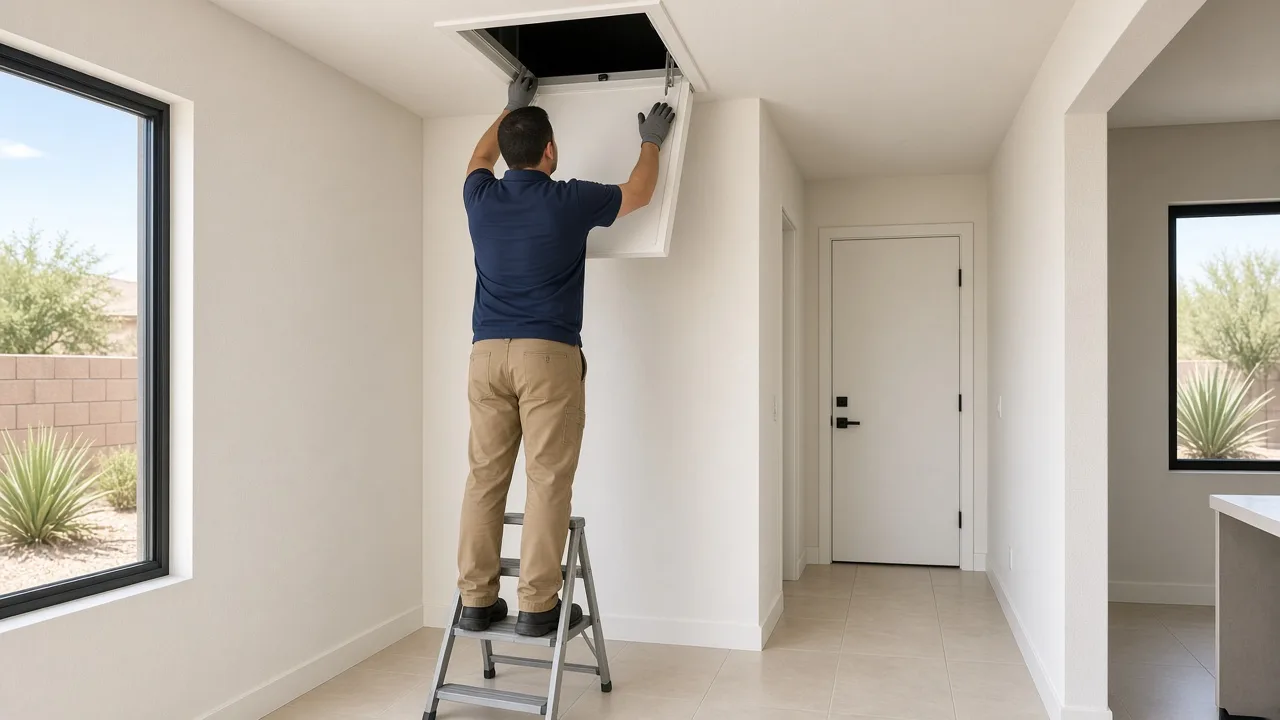
The direct answer
After the inspection, the process is written and calendar-driven. The buyer reviews the findings, decides which items matter, and delivers a single itemized notice of disapproval, the Residential Buyer's Inspection Notice and Seller's Response, or BINSR, by the end of the inspection period. The seller responds by agreeing to items, agreeing to some and proposing alternatives such as a credit, or declining. The buyer then accepts the response and proceeds toward closing, keeps negotiating if both sides are willing, or cancels the contract under its terms. In the standard AAR contract the default rhythm is commonly summarized as 10/5/5: 10 days to inspect and deliver the notice, 5 days for the seller to respond, and 5 days for the buyer to decide. Your signed contract is the only authority on your actual dates, because every one of these deadlines is negotiable.
How the after-inspection process works, step by step
- 1 Read the report with a contractor's eye: separate real defects (safety, structure, systems) from deferred maintenance and cosmetic items, and get written repair estimates for anything you are serious about requesting.
- 2 Deliver one itemized notice before the inspection period ends: in the standard AAR contract the default is 10 calendar days from acceptance, due by 11:59 p.m. on the final day. All disapproved items go into this single notice.
- 3 The seller responds, by default within 5 days: agreeing to all items, agreeing to some, proposing alternatives like a credit, or declining. Under the standard form, a seller who does not respond is treated as declining the requests.
- 4 Decide within the buyer's window, by default 5 days: accept the response and move toward closing, or cancel the contract and have the earnest money returned under its terms.
- 5 Verify at the final walkthrough: confirm the agreed repairs were actually done, document anything incomplete, and resolve remaining items in writing before you close.
What is the BINSR, and why does the deadline matter?
The BINSR is the buyer's written notice listing the items from the inspection that the buyer disapproves of and asking the seller to address them. It is the formal step that turns a report into a negotiation. In the standard AAR contract the buyer gets one notice, all items at once, and it is due by the end of the inspection period, commonly 10 calendar days from acceptance. Under the standard form, if the buyer does not deliver the notice or a cancellation by that deadline, the inspection contingency is waived and the purchase proceeds as-is.
That is why the deadline matters more than any single finding in the report. A great report with a missed deadline is worth nothing at the table. Before you schedule the inspection, read the contract's inspection section so you know your exact window, and put the notice date on your calendar the moment the inspection is booked. The form itself comes from the Arizona Association of REALTORS form set, and our BINSR education page walks through what it does and what to review before you use it.
How sellers respond: fix, credit, counter, or decline
Once the seller receives the notice, the options are straightforward. The seller can agree to all the requested items, agree to some, propose an alternative such as a different way to fix the item or a credit at closing, or decline. Under the standard form, a seller who receives the notice and says nothing within the response window is treated as having declined the requests, so silence is a decision, not a stall.
What buyers should expect
- A full yes is rare; expect a counter that fixes some items and credits others.
- A decline is a position, not a judgment on your requests; your decision window is short, so be ready.
- Every response and agreement belongs in writing with a deadline attached.
What sellers should expect
- The notice is the buyer's list of conditions as the buyer sees them; you can counter or decline any item.
- Replying in writing on time preserves your position; no response is treated as a decline anyway.
- Credits count toward what the buyer receives at closing and may be limited by the buyer's loan program.
Repairs versus credits: which should you ask for?
A repair means the seller fixes the item before closing. The buyer gets the benefit of the seller's contractor and the seller manages the timing, but the buyer also inherits whatever quality that contractor delivered. A credit means the seller contributes money at closing, typically toward the buyer's closing costs, and the buyer handles the work afterward with contractors they choose. The tradeoff is control against certainty: the seller controls the repair, the buyer controls the credit, and both are legitimate depending on the item, the timeline, and the home.
The number that gets negotiated is usually built from contractor estimates, which is why getting quotes before the notice is the most powerful move a buyer can make. One caution applies on both sides: credits are subject to the buyer's loan program's seller-concession limits, so a credit that looks reasonable could exceed what the lender will allow. Your loan officer can confirm the cap before you negotiate around it.

A clearly labeled hypothetical example
Imagine a hypothetical West Valley resale whose inspection finds an aging but working air conditioning system, a dripping hose bib, and a cosmetic crack in the garage floor. To show how the math works, the buyer's contractor estimates $9,500 to replace the AC and $300 for the hose bib. The buyer requests the full list. The seller counters with a repaired hose bib, a $4,500 credit, and the price unchanged. The buyer weighs the $5,000 difference against the loan program's concession limits, accepts the counter, and plans to replace the AC during the first year of ownership. These amounts are placeholders for illustration only, not market data or program terms; your numbers come from your own contractor bids and your negotiation.
What happens if you and the seller cannot agree?
The buyer's decision window is the pressure valve. If the seller declines or counters and the two sides cannot land on a middle point, the buyer can accept the home as-is, keep negotiating if the seller is willing, or cancel the contract within the decision window, in which case the earnest money is returned under the contract's terms. Cancelling over an inspection is not a failure; it is the contingency doing exactly what it was designed to do when the home and the price do not fit.
In practice, most deals never reach that point. The usual settled shape is partial: a few real repairs completed, a smaller credit for the rest, and a closing date that stays intact. Both sides give a little because both sides want the same thing, a finished transaction and a home that is worth the price to the buyer. The deals that fall apart are the ones where one side treats the negotiation as a contest instead of a problem to solve with evidence.
Deadlines, limits, and the traps that derail a good negotiation
- Missing the notice deadline: if the buyer does not deliver the notice (or a cancellation) by the end of the inspection period, the inspection contingency is typically waived automatically and the deal proceeds as-is. One missed date can remove all of the buyer's leverage.
- One notice only: under the standard form the buyer gets a single notice, so every item the buyer wants addressed should be itemized at once. Items left off generally cannot be added later.
- Silence is a decision: a seller who receives the notice and does not answer is, under the standard form, treated as declining the requests. A response in writing is the only response that counts.
- Lender limits on credits: seller concessions are capped by loan program, and the limit applies to the total the seller contributes at closing. Verify the number with your loan officer before you negotiate around it.
- Skipping the final walkthrough: repairs that are agreed but never verified at walkthrough become the buyer's problem after closing. Walk the home, test the fixes, and put any unfinished work in writing.
- Turns into a war over small money: requests that are really personal preferences can sink a deal over a few hundred dollars. Safety, structure, and system defects are worth making; styling preferences rarely are.
How technology helps without replacing judgment
An inspection report can run dozens of pages, and the days around it are full of deadlines, estimates, and competing numbers. Andrew, an AI Certified Agent™, uses digital checklists, document workflows, and AI-assisted organization to turn a long report into a prioritized one-page list with dates attached, and to keep the notice, the seller's response, and the credit math in one place. The tools make the process easier to understand and easier to track. What they do not do is interpret a contract, read a contractor's bid, or decide what is worth asking for, that stays with you, Andrew, and the professionals you bring to the table. Technology organizes the process; judgment runs it.
Frequently asked questions
Do I have to ask the seller to fix everything the inspection found?
No. The inspection report is a snapshot of the home's condition, not a mandatory punch list. Most buyers prioritize safety and function first, systems (roof, AC, plumbing, electrical) second, and skip cosmetic or personal-preference items entirely. Every request is a negotiation, so the strongest approach is to request only the items that genuinely matter to you, backed by a contractor's estimate, and leave the rest alone.
How long do I have to send my repair requests?
The deadlines live in your contract. In the standard AAR Residential Resale Real Estate Purchase Contract the inspection period defaults to 10 calendar days from acceptance, with the notice due by 11:59 p.m. on the tenth day, and the number is negotiable in every transaction. If the buyer does not deliver the notice by the deadline, the inspection contingency is typically waived and the home is accepted as-is. Check the exact dates and deadlines in the contract you signed.
Can the seller just say no to my repair requests?
Yes. In the standard form the seller may agree to all items, agree to some, propose alternatives such as a credit or a different repair, or decline, and a seller who does not respond is treated as declining. If the seller declines or counters, the buyer chooses: accept the response and proceed, counter again if both sides are willing, or cancel the contract within the buyer's decision window with the earnest money returned under its terms.
Is a repair credit the same as a price reduction?
No, and the difference matters. A credit is an amount the seller contributes toward the buyer's closing costs at closing, and the total is subject to the loan program's seller-concession limits. A price reduction lowers the purchase price itself, which changes the loan amount, the loan-to-value ratio, and the monthly payment, and it is handled through renegotiating the price rather than a closing credit. Which one works better depends on your loan type, your cash position, and what the seller will accept, so it is worth running both scenarios with your loan officer before you ask.
What happens if we cannot agree on repairs?
The parties keep negotiating, or the buyer uses the inspection contingency and cancels within the decision window, in which case the earnest money is returned under the contract's terms. Cancelling is not a failure; it is the contingency doing its job when the home and the price do not fit. In practice many deals never reach that point: buyers and sellers commonly land somewhere in the middle, with a few real repairs done and a smaller credit covering the rest.
Related resources
- Understanding Arizona home inspection reports What an inspection covers, how inspectors are certified, and how to read the report without overreacting.
- The BINSR form, explained What the Residential Buyer's Inspection Notice and Seller's Response does and the questions to work through.
- The Arizona purchase contract The contract that carries your actual inspection period, response windows, and deadlines.
- Contingency planning How the inspection contingency fits with financing, appraisal, sale-of-home, and title contingencies.
- Seller concessions How credits at closing work, who pays, and the loan-program limits that apply.
- Home buying process The full path from pre-approval and offer to escrow, inspection, and closing.
Educational note: this article describes how the inspection follow-up generally works in Arizona under the standard AAR Residential Resale Real Estate Purchase Contract and form set, and it is not a promise of any outcome or a substitute for reading your own contract. Inspection periods, response windows, and earnest money positions are set by the specific contract and by the parties' negotiations, and every deadline is negotiable when the contract permits. The hypothetical example uses placeholders for illustration only and is not real data or an offer. Confirm seller-concession limits with your loan officer, repair estimates with licensed contractors, and contract language with your agent, with the Arizona Association of REALTORS forms library, and, where legal advice is appropriate, an attorney. Clearly Sold brokered by HomeSmart. Real Estate, Clearly.
Next step
Walk through the inspection follow-up with the calendar in front of you
Bring the report, the contract, and any contractor estimates. We will build the notice, map your deadlines onto the calendar, and help you weigh repairs against credits so the next step is a decision you make, not a deadline that makes it for you.
- Phone
- 623-400-5957
- hello@clearlysold.com