

Blog · Rewarding Heroes
Law enforcement: home buying in Phoenix Metro, police, deputies, and detention
A practical guide for local and county law enforcement professionals in Phoenix Metro and the West Valley: how the recruit academy, field training, and a first assignment set the housing timetable, why station and jail commutes matter more than a general neighborhood, how to handle secure gear and vehicle storage, and what Rewarding Heroes is and is not. No invented savings, no occupation-based assumptions, just the process done clearly.
 By Andrew Texidor Realtor · Founder, Clearly Sold · AI Certified Agent™ Updated November 19, 2026
The direct answer
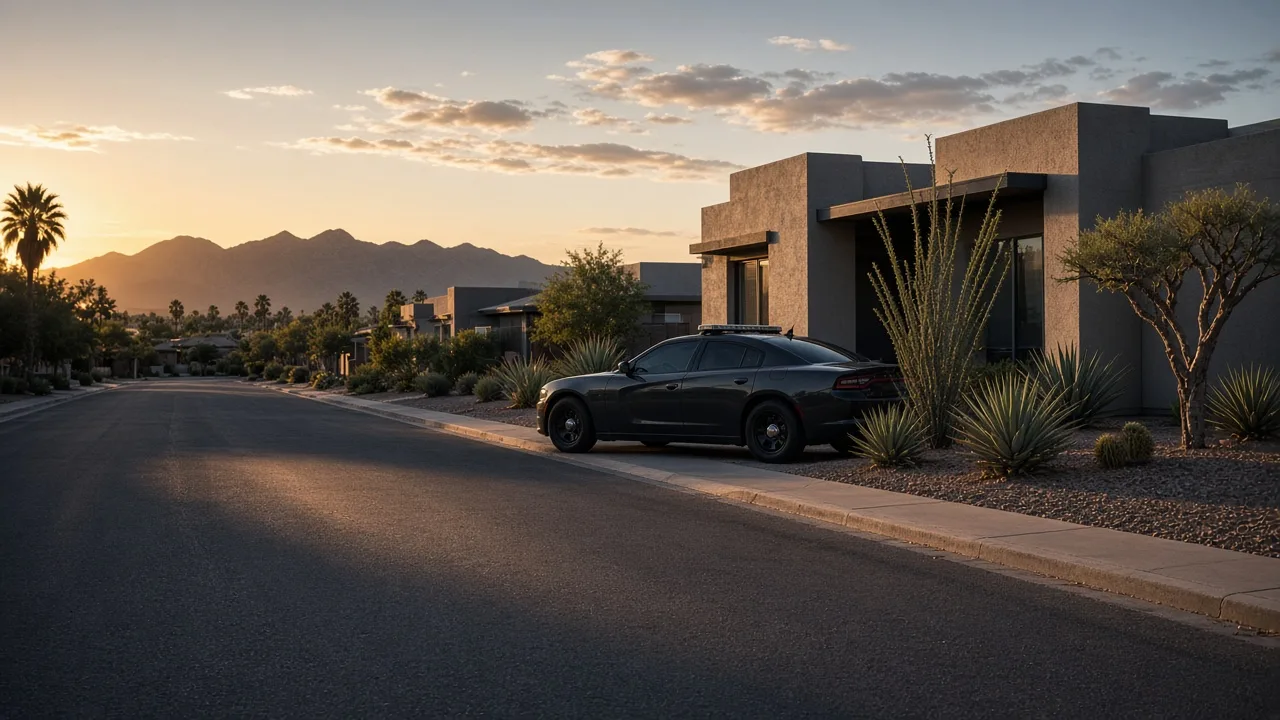
Buying or selling in Phoenix Metro as a police officer, sheriff's deputy, or detention professional is the same disciplined process as any other transaction, with a few layers that matter more than usual: whether you are a recruit, a lateral, or a veteran in a new role, because that sets the academy and field-training calendar; the station, precinct, or jail you actually report to, because that sets the commute and your response reality; and the shift rotation, take-home vehicle, and gear-storage realities that shape which home works. No occupation automatically unlocks a loan, a grant, or a discount, and this guide makes no assumptions about your income, household, or eligibility. Get the written pre-approval, verify every program with the office that runs it, build the shortlist on evidence gathered at your real hours, and let the written agreements carry the promises.
Key takeaways
- Local law enforcement is a patchwork of separate agencies, not one system: AZ POST certifies peace officers in Arizona, and each city, county, and role sets its own academy, field training, and hiring calendar.
- The academy and field-training window is the housing reality for new hires: recruits train in a block (roughly 18 to 26 weeks depending on the agency and route), then work under close supervision, and the timing anchors when buying, renting, or selling makes sense for your own finances.
- Test the commute to your actual report location at report time, not noon, and visit the neighborhood at the hours you will actually be home on your rotation.
- Secure gear and vehicle storage depend on the role and the house: measure the garage and driveway, read the HOA rules on vehicles, and confirm with your agency how you store a duty weapon at home.
- Financing and assistance, from FHA and conventional loans to VA and programs like HUD's Good Neighbor Next Door, are verified with the office that runs each one, and none is a Rewarding Heroes benefit.
What is the Rewarding Heroes program, honestly?
Rewarding Heroes is the program Andrew Texidor founded within Clearly Sold for military, law enforcement, fire and rescue, first responders, teachers and school administration, doctors, nurses and healthcare professionals, Border Patrol, and utility workers. It is brokered by HomeSmart. Its mission is to bring the same consumer-first clarity this site is built on to the people who serve the community: a clearly stated fee structure, a defined scope of work, and an agent who answers questions plainly. It is a real estate service program, not a cash-back or rebate arrangement, and not a promise of savings.
$8,000 per applicable transaction side for sale prices up to and including $550,000; 2% of the full sale price above $550,000. Fees and services are governed by the applicable written agreement. Buyer-broker compensation is separate and negotiable.
Any feature, pricing detail, or eligibility point of the program is confirmed in the written agreements for your transaction, and those agreements are the only promises that count. You will meet other brands and programs with similar-sounding names, and no affiliation with any of them is claimed here. Ask every provider, in writing, who they are, what they include, and what they cost, and hold them to the same standard.
Local roles, not one badge: police, deputies, and detention
Arizona law enforcement is not one system. State certified peace officers must meet the standards of the Arizona Peace Officer Standards and Training Board (AZ POST), and the agencies that employ them, the precincts they staff, and the jails they report to are separate. For a housing search the useful version of that is simple: the commute that matters is to your actual report location, and the timing that matters is your agency's own calendar, not a regional generalization.
In the West Valley, municipal departments operate in Buckeye, Avondale, Goodyear, Glendale, Peoria, Surprise, and West Phoenix is served by the Phoenix Police Department. Maricopa County Sheriff's Office deputies work countywide, and its custody bureau runs the county's jails, which sit in Phoenix rather than in the cities the jail population comes from. Roles differ as well: patrol response, investigations, school resource, traffic, court security, detention and corrections, and administrative support each have different hours, call-backs, and take-home equipment. The point is not to classify anyone, it is to build the evidence about the specific job you actually hold.
Station and jail addresses can move, departments relocate precincts, and assignments change by seniority and role, so treat any published location as a starting point to confirm with the agency. Among the current anchors, for reference: Glendale Police headquarters at 6835 N. 57th Drive with a Foothills station at 6255 W. Union Hills Drive and a Gateway station at 6261 N. 83rd Avenue; Peoria's Public Safety Administration Building at 8351 W. Cinnabar Avenue; Surprise's headquarters at 14250 W. Statler Plaza; Goodyear Police headquarters at 11 N. 145th Avenue; Avondale's main station at 11485 W. Civic Center Drive; and Buckeye Police at 21699 W. Yuma Road. Maricopa County Sheriff's Office headquarters is at 550 W. Jackson Street in Phoenix, and its custody facilities include the Lower Buckeye Jail at 3250 W. Lower Buckeye Road and the Intake, Transfer and Release Facility at 2670 S. 28th Drive. Confirm each address and the assignment you actually hold with the agency before planning around it.
The career pipeline as the housing timetable
For a new hire the housing calendar is anchored by the training pipeline, not by moving season. Arizona peace officers complete an AZ POST certified basic training academy whose curriculum runs at least 672 hours of training, and the calendar a recruit reads is the agency's own. West Valley academies run roughly 18 to 26 weeks depending on the route: Surprise's recruit course runs about 18 to 21 weeks, Glendale's about 24 weeks, and Maricopa County's sworn deputy academy about 26 weeks, with a shorter detention deputy academy for jail personnel that MCSO describes as about 12 weeks. Lateral and out-of-state hires typically do not repeat the full recruit academy: AZ POST grants qualified lateral applicants certification through waiver testing in lieu of attending a basic course at an academy, and agencies such as Glendale explicitly route qualified laterals to the AZ POST waiver test rather than the recruit academy. Several West Valley agencies train together through the Glendale Community College Law Enforcement Training Academy, which has served Avondale, Buckeye, El Mirage, Glendale, Goodyear, Peoria, Surprise, Tolleson, and Wickenburg, and Peoria sends recruits to Maricopa County under an intergovernmental agreement. Confirm the exact academy your agency uses, and its length, with the agency or academy.
Academy graduation is followed by a field training period, in many West Valley agencies run through an official Field Training Officer (FTO) program, then a probationary period whose length varies by agency and is confirmed in the job bulletin or personnel policy. The practical consequence for a move is a calendar with anchors: an academy start date, a graduation and FTO window, and a probation phase during which assignment details can still change. Renting during the academy or early field training is a reasonable, not a second-class, choice while you confirm where a first assignment actually lands. None of this is a recommendation for or against either choice. It is a list of questions to run with the department's recruitment or human resources office, in writing, before you let a real estate deadline depend on an employment detail that may still move.
Shift reality and the commute at report time
Law enforcement schedules are not one pattern. Patrol and detention run rotations that may include days, swings, nights, weekends, and court, and how much of that is fixed varies by agency, unit, and seniority. Write down your own pattern rather than assuming one: which days you are home, at what hours you sleep, and when you actually have daylight free, because those are the windows a search, a showing, and a closing have to fit.
- Drive the route at report time. A 5 or 6 a.m. roll call or a night shift change is not the noon map. A route that saves you 20 minutes at report time is a different house than one that does not, and the difference is invisible on a portal map.
- Visit at the hours you will be home. A community that reads as quiet on a Saturday tour may be something else at 11 a.m. after a night tour, or at 3 a.m. when calls run late. Visit at your real hours, and ask neighbors what the street sounds like on a typical night.
- Know the take-home vehicle reality. Some officers have a take-home or assigned vehicle, and some do not. That changes parking needs, driveway and garage fit, and which HOA vehicle rules apply, so confirm the assignment policy with your agency before you shortlist a home that assumes off-street space you may or may not need.
- Leave margin for call-backs. Court, training, and unplanned call-ins happen on off days. A move or a closing that needs you in person twice in one week is a plan that depends on your whole schedule holding, so build buffer where you can.

Gear, secure storage, vehicles, and HOA rules
Law enforcement roles are gear-heavy in ways that depend on the assignment. Patrol, detention, and investigative roles differ in what they carry home and what it requires, and the rules for storing a duty weapon at home are set by agency policy and applicable law, not by a home listing. The practical version of the question is the same for everyone: does the property fit the vehicles and gear your actual role involves, and do the community rules allow the way you actually use them?
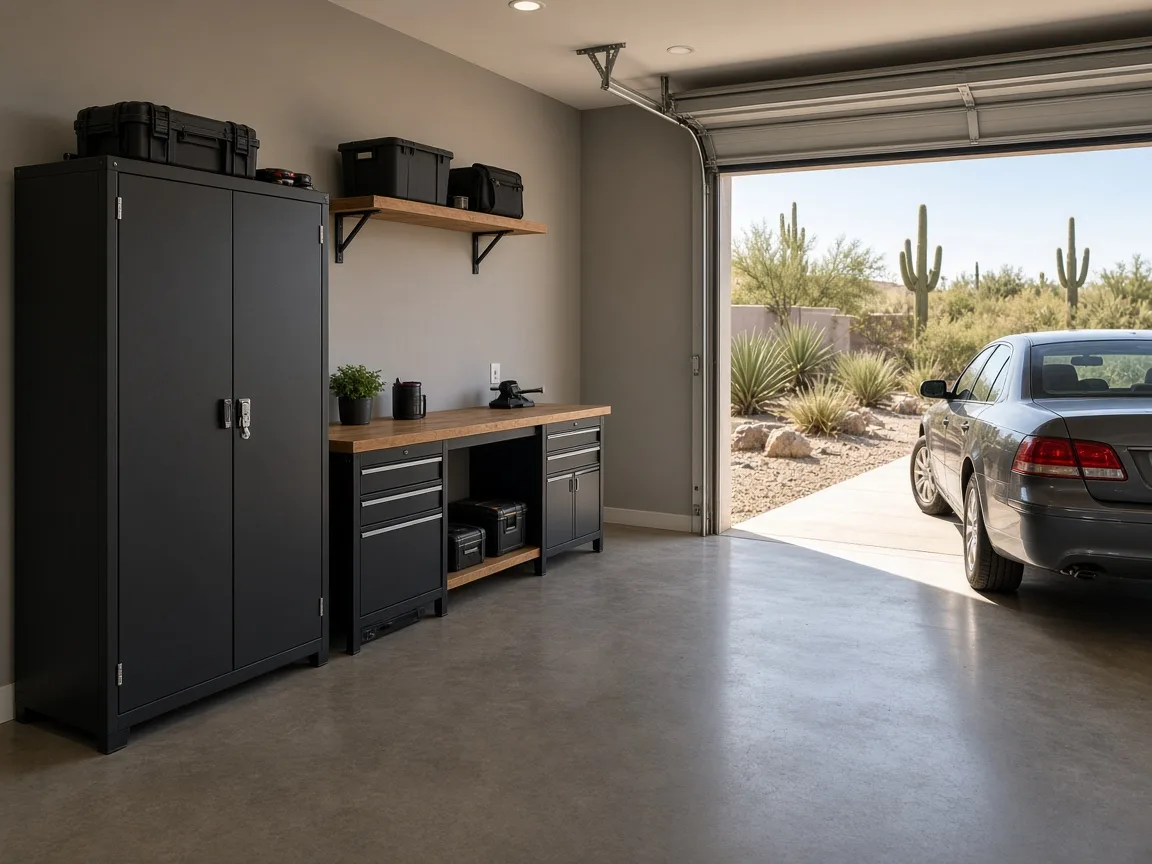
- Garage and driveway reality. Measure the garage and the driveway, not just the car-count in the listing. A take-home vehicle, a full-size truck, or an equipment bag changes what "two-car garage" really supports.
- HOA rules on vehicles. HOA governing documents commonly regulate marked or commercial-looking vehicles, oversized trucks, trailers, boats, and overnight street parking, and the rules vary street by street. Ask for the current rules and read them before you fall for the home.
- Secure storage for duty equipment. Best practice for firearms and ammunition is secure storage, and confirm with your agency exactly how you are expected to store a duty weapon at home. Look for a lockable cabinet or closet with the space your actual kit needs, and verify HOA, insurance, and lease terms rather than assuming.
- Quiet, secure, and dark when you need it. If you sleep during the day, room-darkening options and a quiet street matter more than a house that photographs well. These are ordinary buyer preferences, worth writing down like any other.
Rent or buy through the academy and field training
The single biggest financial question during training is rent versus buy, and it is decided by your own horizon and finances, not by your badge. The shorter and less certain the next few years, the more sense renting makes while you learn the region and confirm where a first assignment lands. If you expect to stay several years, buying can make sense, with an eye on resale and rental flexibility if an assignment changes. Work the actual numbers, not a rule of thumb, and get a written pre-approval before you tour either way.
Selling your home around the schedule
Selling works fine on a rotating-shift career when the process is defined in writing. The agent handles showings, the daily listing work, and most of the communication; you make the decisions in defined windows around your off blocks; and digital tools keep documents and updates moving while you are on shift. Preparation can be scheduled on your day blocks, and staging and photography are usually done in a single coordinated day you choose.
The strategy question is separate from the schedule question, and it has the same honest answer it does for every seller: the options differ in fee, scope, and tradeoffs, and none fits everyone. Clearly Sold's Market Launch strategy pairs a transparent full-service structure with clear, upfront pricing and a defined process, which suits sellers who want the work delegated. Flat-fee listing puts more of the process in your hands for a defined fee, with a genuine tradeoff in the scope of work you take on, which is harder to absorb on a rotating shift. Cash offer programs trade some of the open-market upside for speed and certainty, and the comparison belongs on net proceeds, not on promises. Compare all of the options on the tradeoffs before choosing one.
Financing to verify, with no occupation shortcuts
The first thing to clear away is the assumption that the badge unlocks a loan term. Lenders underwrite FHA, conventional, and VA loans to the borrower's actual income, credit, and documentation, and they treat shift differentials, overtime, and second jobs in the way each lender's guidelines allow. Ask your lender in writing how your exact income picture is documented, and compare two or three lenders before committing to one.
- VA loans, for those who earned eligibility. Service members and veterans who earned VA eligibility through qualifying service can compare a VA loan against other products. The VA loan cost guide covers eligibility, the funding fee, and the exemptions with official sources.
- Arizona down payment assistance. Arizona's state-run programs are administered by the Arizona Industrial Development Authority with the Arizona Department of Housing, including Home Plus and Arizona Is Home, and Maricopa County runs its own programs. Funding, income caps, and terms change year to year, so verify current rules with the official program sources and a participating lender. The down payment assistance guide walks through what to verify and where.
- HUD's Good Neighbor Next Door, a niche federal program. HUD's Good Neighbor Next Door program is open to full-time law enforcement officers, firefighters, EMTs and paramedics, and certain teachers, and it offers a 50% discount off the list price of HUD-owned homes in designated revitalization areas, with a down payment as low as $100 when using an FHA-insured mortgage and a three-year owner-occupancy requirement. The catch is structural: the inventory is limited to HUD-owned homes in designated areas, offers are submitted at list price within a short posting window, and the program's status and rules can change. It is a federal program entirely separate from Rewarding Heroes, and eligibility and availability are verified with HUD, never assumed.
For every financing route, ask the same four questions: do I meet the current eligibility rules, what exactly is included, what is the rate and how long does it hold, and what happens if a rule changes before closing? Get the answers in writing from the lender or agency that runs the program, not from a forum or a flyer.
What can technology do for a schedule-bound search?
Andrew is an AI Certified Agent™, and the tools behind Clearly Sold exist to put the options, costs, and tradeoffs in front of you in a form you can act on between shifts. Across the Rewarding Heroes pages , that means AI-driven home shopping tools that help organize the search, saved searches and listing alerts that run while you are on duty, side-by-side comparisons that keep every home on the same cost and condition assumptions, video walkthroughs that stand in for a visit you cannot make in person, and digital document review with remote-enabled closing.
The honest limit is the same one this site applies everywhere: tools organize information and make the tradeoffs visible, and they never replace professional judgment, never promise outcomes, and never guarantee a price, a timeline, or an approval. The decisions are yours, made on evidence you can see. If you want to know what a tool does with your own numbers, ask, and we will show you rather than tell you.
What should you verify, and with whom?
Verify with your lender
Program eligibility, how shift differentials, overtime, and second jobs are documented, rate locks, and how long approvals hold. Compare lenders and get estimates in writing.
Verify with the agency
Report locations, academy and field-training calendars, probation length, shift and take-home vehicle policy, and firearms storage expectations. Ask HR or recruitment directly, in writing.
Verify the community
HOA fees and rules on vehicles, parking, and storage, plus property taxes, insurance estimates, and the exact emergency and law enforcement jurisdiction for each address.
If a detail matters to your decision, it deserves a written answer from the office that governs it. That habit, more than any single fact in this guide, is what keeps a rotating-shift career and a real estate transaction on the same calendar.
Frequently asked questions
Does being a police officer, deputy, or detention officer automatically qualify me for Rewarding Heroes?
Rewarding Heroes serves the people who serve Arizona, including law enforcement professionals. It is a real estate service program: representation with a clearly stated fee structure you can review in writing before you commit. It is not a cash-back or rebate arrangement, and it does not promise loans, grants, or savings. Program features and pricing are confirmed in the written agreement for your exact transaction, and that agreement is the only promise that counts.
Is there an automatic loan or discount for police, deputies, or detention officers?
There is no single automatic loan for public-safety employment, so verify everything with the provider. VA loans exist only for those who earned VA eligibility through qualifying service, not as an employment perk. Some Arizona cities, counties, and the state fund down payment assistance with income caps, purchase price limits, and funding deadlines that change year to year. HUD's Good Neighbor Next Door program is open to eligible law enforcement officers and offers 50 percent off certain HUD-owned homes in designated revitalization areas with a three-year occupancy requirement; it runs on a limited inventory and its current status is verified with HUD. Ask every provider directly, in writing, and treat none of these as a Rewarding Heroes benefit.
Is Good Neighbor Next Door part of Rewarding Heroes?
No. HUD's Good Neighbor Next Door is a federal program administered by HUD for HUD-owned homes in specific areas, with its own eligibility rules, listing inventory, and deadlines. Rewarding Heroes is a real estate service program founded by Andrew Texidor and brokered by HomeSmart. One is a housing program run by a federal agency; the other is real estate representation. They can coexist in the same purchase, but each is governed by its own provider's rules, and neither depends on the other.
Should I rent or buy while going through the academy and field training?
That depends on your expected horizon and your own finances, not on your occupation. The shorter and less certain the assignment, the more sense renting makes while you learn the area and see where a first assignment lands. If you expect to stay several years, buying can make sense, with an eye on resale and rental flexibility if an assignment changes. A strategy call works through your actual timeline and numbers; there is no one-size answer for any career.
Do HOA rules affect where I can park a patrol vehicle or store a duty weapon?
Community governing documents commonly regulate commercial-looking or marked vehicles, oversized trucks, trailers, and overnight street parking, and the rules vary street by street, so read the current rules before you commit. For firearms and ammunition, best practice is secure storage, and if you carry a weapon on the job, confirm with your agency how you store it at home and whether any HOA, insurance, or lease rule imposes additional requirements. This article is general guidance, not legal advice, and applicable law and agency policy can impose duties that go beyond what any community document says.
How does shift work change buying or selling a home?
Scheduling is the practical difference: showings, inspections, and closings have to fit around rotating days, nights, and court or training commitments, and a good plan builds buffer for that. Nothing about the process itself changes by job title. The same evidence-based approach applies, with program terms verified in writing and the timeline built around the actual week.
Related resources
- Law enforcement and Border Patrol: buying guide The earlier combined guide covering AZ POST, assignment reality, commutes, and financing across both groups.
- Border Patrol: academy to first station The separate federal pipeline guide: the Artesia academy, sector assignment, and station-by-station commute math.
- Rewarding Heroes for first responders The program page for fire and rescue, law enforcement, and first responders.
- Financing resources for heroes Questions to ask a lender and links to verified grant and mortgage resources.
- Home buying process The step-by-step path to an Arizona purchase, from pre-approval to keys.
- Grant and assistance programs An honest look at programs that may help, and what to verify with each provider.
- Compare seller options Every selling strategy side by side, with the tradeoffs stated.
- About Andrew and Rewarding Heroes Why the program exists, what it is, and what it is not.
Sources and verification: the AZ POST certified basic training academy curriculum figure (672 hours) follows the Arizona POST Training, Research, and Academy Certification Unit and Mesa Police Department's basic training academy hour table. Academy-length references follow agency recruitment material: Surprise Police Department's recruit information packet (18 to 21 weeks), the City of Glendale's police recruit page (about 24 weeks), Maricopa County's sworn deputy academy (about 26 weeks) and its detention deputy academy, and the Peoria and Goodyear intergovernmental and academies, including the Glendale Community College Law Enforcement Training Academy serving the named West Valley cities, each agency as the authority for its own process. Lateral and out-of-state officer certification follows the AZ POST Waiver Process page, which grants qualified lateral applicants certification through waiver testing in lieu of attending a basic course at an academy, and the agencies' own recruitment materials affirming that route. Station and jail addresses follow the agencies' own pages (Glendale, Peoria, Surprise, Goodyear, Avondale, Buckeye, and Maricopa County Sheriff's Office), reported as current anchors with the standing caveat that addresses, precincts, and assignments change. Field training and probation processes follow agency policy references such as Peoria Police Policy 519, with probation lengths left to each agency's job bulletin or personnel policy. Good Neighbor Next Door terms follow HUD's official program page and 24 CFR Part 291 Subpart F, reported as current with the standing caveat that program status and inventory change. Arizona down payment assistance terms follow the Arizona Industrial Development Authority and Arizona Department of Housing program descriptions, with current amounts, caps, and deadlines left to those official sources. This article explains how home buying and selling generally work in Arizona with context for local and county law enforcement professionals. It is not legal, tax, lending, employment, or financial-planning advice, and it makes no claim about any program's current terms. Loan products, assistance funds, benefits, rates, fees, and taxes change and vary by provider, employer, agency, county, and transaction. Verify current eligibility and terms with your lender, your agency, the program's own office, and your tax professional before you commit.
Next step
A clear plan, built around the duty calendar
A short call maps the process to your schedule: which financing to verify, what the report-location commute evidence says, and the first steps this month. No cash-back hype, just the plan.
- Phone
- 623-400-5957
- hello@clearlysold.com