Blog · Market Updates · Monthly briefing

West Valley market and development briefing: November 2026

This is the dated, sourced monthly briefing for Phoenix Metro and the West Valley: what the newest reports show for prices, inventory, time on market, and mortgage rates across Buckeye, Peoria, Goodyear, Surprise, Avondale, and Glendale, plus the builders' incentive landscape and the office-exclusive listing litigation that dominated the industry's October news. This edition was updated November 9 with the first full-month October metro release and a fourth straight weekly Freddie Mac rate decline. Every figure names its geography, period, scope, and source, so you can check the original before you act on it.

Andrew Texidor, Realtor and founder of Clearly Sold By Andrew Texidor Realtor · Founder, Clearly Sold · AI Certified Agent™ Updated November 9, 2026
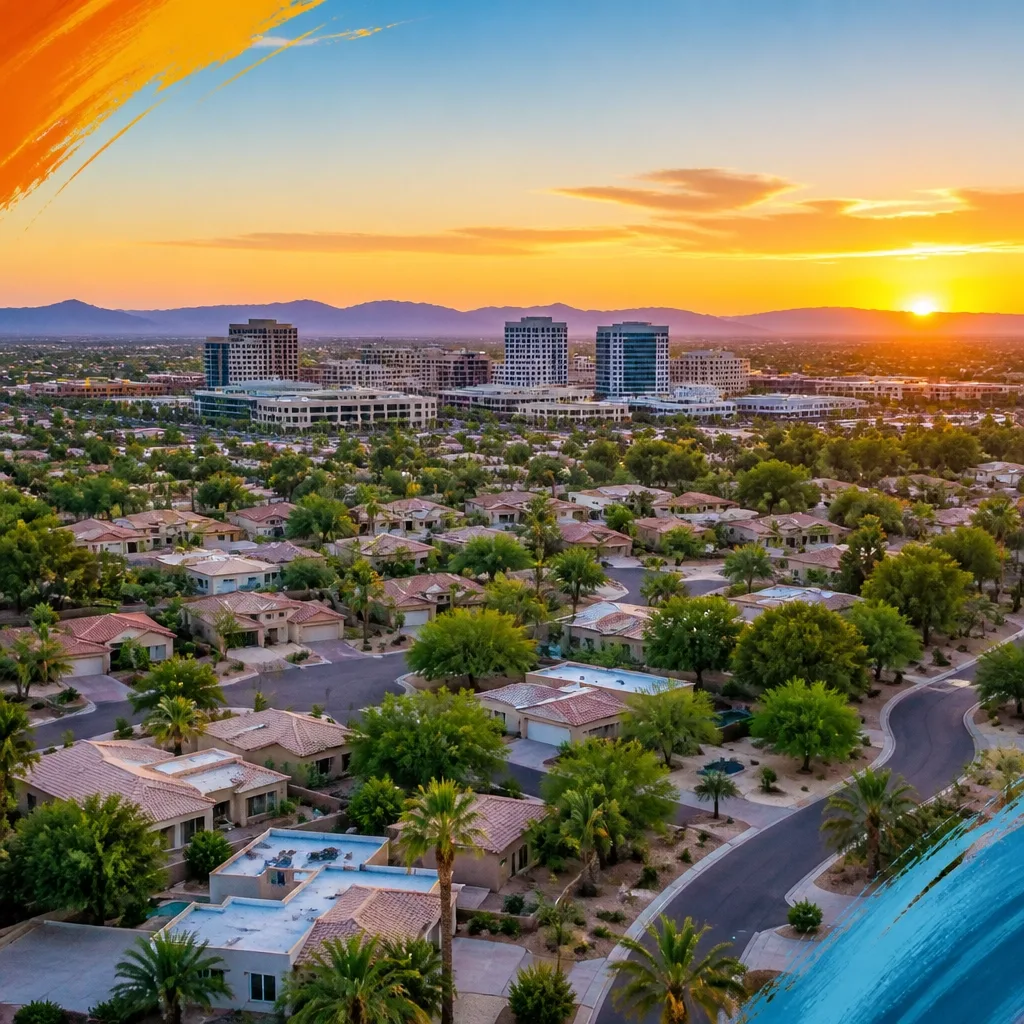
Aerial view of a Phoenix-area residential community at sunset
The West Valley is a set of submarkets that move out of step with each other; the monthly briefing keeps each city's numbers separate. Photo: Clearly Sold.

The direct answer

The newest dated reports describe a balanced, slightly-loosening market across Phoenix Metro and the West Valley as November opens, and the first full-month October release, reported November 7, now confirms the drift: median prices roughly flat to modestly lower year over year in most cities, inventory above pandemic-era levels, homes taking about two to three months to sell, and mortgage rates easing to about 7.18% after four straight weekly Freddie Mac declines. The development pipeline stays busy but mostly in proposed and approved stages, and the industry's highest-profile fight, over office-exclusive listings and Clear Cooperation, is a lawsuit in motion, not a change in today's rules. The honest takeaway is directional: expect negotiation, price or offer from recent comparables, verify incentive terms and loan estimates in writing, and understand that a publicly marketed home must still be filed to ARMLS within one business day today.

What the data shows, dated and sourced

Phoenix Metro, latest full month (October 2026, ARMLS-area release)
The ARMLS-area October roundup reported November 7, 2026 put the median sale price at about $448,000, down about 1.5% year over year, with about 27,427 active listings, up about 6.8% year over year, about 6,347 listings under contract, down about 13.5%, and 5,155 closed sales, down about 9.8%, a combination its authors described as the market moving deeper into buyer's territory. The release as verified did not publish October months-of-supply or sale-to-list figures, so the prior full-month reading remains the dated reference for those: September 2026 per ARMLS was about $450,000 median, about 25,251 active listings, about 4.45 months of supply, about 5,511 closings, and a sale-to-list ratio of about 98%.
City of Phoenix, October 2026 report
The city's own report put the median single-family sale price at about $485,000, down about 3.5% year over year, with about 68 days on market (about 7 days faster than a year earlier), about 3.9 months of supply versus 3.5 a year earlier, and pending sales down about 37.3% year over year, a reminder that the metro is not a single number.
A notable outlier: the 85012 ZIP code
Phoenix's central midtown/uptown 85012 ZIP code posted metro Phoenix's biggest home-price gain, up about 44.2% for the year ended September 30, 2026, even as the broader metro stayed nearly flat. It is reported as a ZIP-level anomaly and a caution: one ZIP or one month does not describe a market, which is why this briefing keeps city-level figures separate from the outlier.
West Phoenix, single-family, October 2026 (ARMLS-based city report)
Typical single-family price about $372,816, up about 0.7% year over year, with 332 closed sales and about 49 days on market, a faster-turning pocket than the citywide read.
Buckeye, single-family, October 2026 (ARMLS-based city report)
Median sale price about $397,990, down about 0.5% year over year, with 253 closings, about 87 days on market (about 5 days slower year over year), and about 4.7 months of supply. A separate market index put Buckeye at about 51.1 in September 2026, a hair on the buyer's side of neutral.
Peoria, single-family, October 2026 (ARMLS-based city report)
Median sale price about $515,000, down about 2.7% year over year, with 182 closings, about 76 days on market (about 5 days faster year over year), and about 4.0 months of supply.
Goodyear, most recently verified city figures
The August 2026 ARMLS-based city report showed a median price around $483,000 with roughly 195-closings-per-month volume and a large active inventory; a September reading put the median list near $490,995. Redfin's three-month median for the city was about $475,000, up about 1.0% year over year over its reported window. A verified October 2026 city figure was not yet available this run.
Surprise, latest verified readings
Surprise carried a large active inventory (on the order of 1,200 listings) with a median list price near $450,000, and year-over-year price changes reported around minus 4%. A July/August 2026 ARMLS-based report showed about 6.4 months of supply, the highest of the West Valley cities verified here, meaning Surprise leans toward buyers more than its neighbors.
Avondale and Glendale, latest verified figures
Avondale's rolling 12-month median was about $420,000 as of July 2026 with roughly 260 active listings. Glendale and Litchfield Park had no current city-level public figures verified for this run; metro context and an address-level market analysis are the honest stand-ins.
30-year fixed mortgage rate, first week of November 2026
Freddie Mac's Primary Mortgage Market Survey put the national 30-year fixed at 7.24% as of October 29, 2026, down from 7.32% a week earlier, then at 7.18% in its November 5, 2026 release, a fourth consecutive weekly decline. Through the first days of November, daily trackers had already eased to about 7.08% to 7.10% (Forbes, NerdWallet, Zillow, Fortune), while the MBA's contract rate read about 7.3% for the week ending November 4. Daily trackers and the weekly survey measure different things, so the honest reading is a range around roughly 7.1% to 7.3%, with the survey's four-week slide confirming the direction, and one lock with a lender still matters more than any survey number.


Why do the city numbers differ from the metro numbers?

Each source defines its figures differently: single-family only versus all residential, recorded closings versus pending contracts, city boundaries versus ZIP codes, a one-month median versus a rolling period, and average versus median days on market. Geography alone explains a large share of the spread. A West Valley resale, a new-home community, and a 55+ resort community sit in different price bands even when they share a city line, and a ZIP-code outlier like 85012 would be invisible in a metro headline.

That is why this briefing attaches geography, period, scope, and source to every figure, and why it never mixes a median sale price with an estimated home value or an average with a median days-on-market figure. A number without a date is a marketing piece; a number without a definition cannot be compared with the one you saw last week. When a figure could not be verified this run, the briefing says so instead of filling the gap.

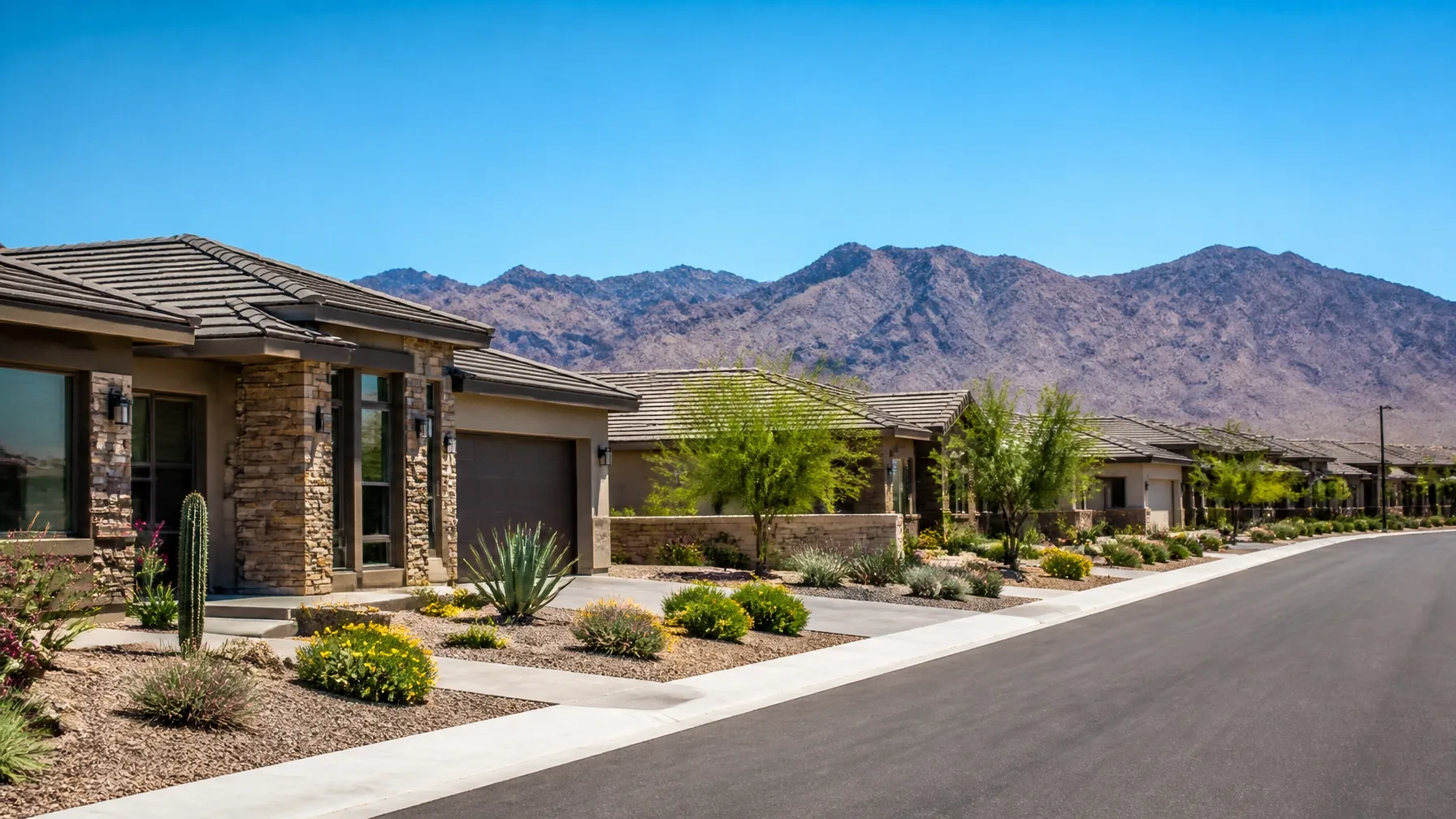
A modern residential street in the West Valley with stucco homes and desert landscaping
New-home communities and resale neighborhoods compete for the same buyers; the briefing tracks both sides of that pipeline. Photo: Clearly Sold.

Development tracker: proposed, approved, and under construction

The West Valley pipeline is the busiest in the region, but the stages matter. A recommendation before a planning commission, an approved rezoning, a financed site, and an open community are four different facts separated by years. Each item below carries its status as of this run, and projected dates are labeled as estimates.

01 · Recommended to City Council · October 27, 2026

Monte Verde multifamily, Buckeye

Buckeye's Planning and Zoning Commission recommended approval of a Community Master Plan amendment, filed for landowner Walton International Group, that would let The Wolff Company build a roughly 276-unit multifamily community on about 14 acres at the northeast corner of Lower Buckeye and Apache roads. The change clarifies multifamily residential as an allowed use under the Mixed-Use land designation in the Monte Verde planning area. It is a recommendation: the City Council decision and the full approval and construction sequence still lie ahead.

02 · Proposed · awaiting City Council

The Cascades, Buckeye

On September 24, 2026, Buckeye's Planning & Zoning Commission unanimously recommended rezoning about 2,700 acres carved out of the roughly 4,000-acre Elianto master plan, east of Sun Valley Parkway, to create a community reported at about 11,000 to 11,600 homes with 30 to 155 acres of nonresidential uses. It is still a recommendation: the City Council action and the full entitlement process sit ahead, and any construction timeline would follow approvals, infrastructure, and builder pace.

03 · Active long-term master plan

Teravalis and the Floreo phase, Buckeye

Howard Hughes' Teravalis remains one of the country's largest active master plans. Per the developer, the first roughly 3,000-acre phase, Floreo, is planned for up to about 8,500 homes, around 7 million square feet of commercial space, and more than 600 acres of open space, within a full master plan of up to 113,000 homes and 62 million square feet of commercial. The horizon is decades, phases open at their own pace, and amenities follow population, not the other way around.

04 · Approved September 9, 2026

Buena Vista Ranch rezoning, Surprise

Surprise's City Council approved a rezoning of about 370 acres near Wittmann, at Pinnacle Peak Road and 227th Avenue adjacent to Festival Ranch, for multiple housing densities. Approval sets the land use; the practical questions for future residents are phasing, roads, and school capacity, which the city's records and the eventual builder timeline will answer.

05 · Financed · construction stage

Basis Industrial self-storage, Surprise

Basis Industrial, a Florida-based firm, closed on land at 17140 W. Waddell Road in September 2026 with a $20.5 million construction loan from NexBank and NexPoint for a 102,673-square-foot, 707-unit climate-controlled storage facility, the company's first Arizona project. The operator-targeted opening is fall 2027, which is an estimate, not a commitment.

06 · Proposed · early stage

Far West Valley / Tonopah mixed-use megaproject

On September 3, 2026, Arizona Land Consulting announced plans off Interstate 10 and 411th Avenue in Tonopah for a mixed-use campus reported at $6 billion to $10 billion: a film production studio, amusement parks, hotels, retail, and a data center campus, with financing described as equity and debt. These are announced intentions: entitlements, financing, and schedule are not yet public facts, so treat the project as early-stage until approvals and shovels follow.

07 · Infrastructure · public input stage

West Phoenix Light Rail Extension and corridor work

Valley Metro and the City of Phoenix held public open houses in October 2026 on a proposed 10-mile West Phoenix Light Rail Extension connecting the existing system to the Desert Sky Transit Center, with route options along Central Avenue/Indian School Road or 19th Avenue/Camelback Road. Supporting corridor work continues: the Tolleson Aquatic Center (the city's first public pool since 2018, with completion estimated from December 2026 into 2027), a roughly 119,000-square-foot self-storage facility at 51st Avenue and Cactus on the Glendale border, and a 1.2 million-square-foot industrial expansion in El Mirage announced in October 2026 that would add the Phoenix market's first 42-foot-clear-height speculative buildings. These are the corridor facts as of late October 2026.

What the development pipeline means for buyers and sellers

For buyers, the pipeline is a long-term supply story, not a current price signal. A plan approval does not put a roof over anything for several years, and amenities follow population, so the honest questions are about timing: what is the phase-by-phase delivery schedule, what infrastructure is funded before the first move-ins, and where will schools and services sit in the sequence? In Buckeye, the near-term rental supply (such as the Monte Verde multifamily recommendation) is a different product from for-sale housing, and the two compete for different buyers.

For sellers, the nearby new-home community is already your competition: builder incentives reset the price conversation around them, and the resale number that matters is what comparable resales actually closed at, not a metro median. For both sides, the practical discipline is the same: confirm status in public records, get the builder's current terms in writing with a date, and price or offer from comparable sales near the property, never from an announcement.

Builder incentives: what the verified late-2026 picture shows

Dated late-2026 sources describe rate buydowns and closing-cost credits as the dominant Phoenix-area builder incentive, with roughly 56% of Phoenix closings including some seller concession averaging about $10,000 in value. Reported West Valley programs vary by builder and phase: some list rate buydowns as low as the mid-to-high 3% range alongside incentive packages, Meritage Homes has been cited as pairing a large closing-cost credit with a choice of buydown at its Waddell area communities, Lennar's Heritage 55+ community in Surprise typically pairs a 2-1 buydown with a closing credit and a smart-home package, and various Buckeye and Peoria communities advertise entry prices from the low $300,000s. These are reported findings from dated compilations, not a universal or current offer, and every one must be verified in writing.

The material conditions matter as much as the headline credit. Buydowns generally require the builder's affiliated lender, whose pre-buydown base rate can run about 0.25 to 0.5 points above an outside quote, and credits vary by phase, lot, and inventory, so a bigger credit is not automatically a better loan. The way to use it: ask for the written incentive sheet with a date, compare it against the same loan amount and rate assumptions from your own lender, and treat the total cost, not the credit, as the number you compare.

Industry watch: Clear Cooperation, office-exclusive listings, and the Compass litigation

The biggest industry-practice story of the last month is the escalation of litigation over office-exclusive listings. A coalition of MLSs including ARMLS sued Compass in October 2026, with a seventh MLS, Northern California's MLSListings, joining through an amended complaint filed October 30, 2026, and CRMLS and Compass have filed separate, overlapping cases in New York and California over MLS submission rules and agent fines, where Long Island's OneKey MLS was confirmed as a CRMLS co-plaintiff and Compass has moved to dismiss or transfer the case and to sever OneKey's claims. On November 2 and 3, there were procedural moves in a related case over subpoenas in a private-listing-network dispute, with NAR opposing a Compass deposition request it characterized as seeking a friendly witness while refusing document production, and three agents moving to quash NAR subpoenas. None of this has changed the rules on the ground: under the Clear Cooperation framework ARMLS enforces, a home that is publicly marketed anywhere must be submitted to the MLS within one business day, and that shared inventory is what feeds the consumer search tools.

The consumer question is genuinely one of tradeoffs. Sellers may value the option to market privately first and control exposure, while buyers benefit from one shared, searchable inventory of homes that are publicly marketed. Transparency and access are both legitimate goals, and the industry, the courts, and the companies are where the balance is being argued. For a buyer, the practical question to ask any agent right now is whether the homes you are seeing are on the shared MLS and whether anything has been held back; for a seller, ask what listing strategy best fits your privacy, timeline, and exposure goals. Our detailed article on the litigation separates the allegations, the company positions, and what is verified, so you can see which parts are decided and which are still in court.

Technology, data, and the judgment that stays human

Clearly Sold is built the way modern consumers expect: current data, transparent comparisons, and tools that make the numbers easy to understand, paired with an experienced professional's judgment on top. As an AI Certified Agent, Andrew uses technology to compile, date, and cross-check market information like this briefing, but the final read still comes from comparables, disclosures, and negotiation, which software does not replace. Technology here is a way to make the same information easier to verify and compare, not a machine that pretends to predict prices.

Practically, that means you get the convenience of a sourced data snapshot and a clear decision framework, without being sold a prediction. Use the briefing as your starting context, then turn the questions here into the specifics for your address: a market analysis for the sellers, a written loan estimate and incentive comparison for the buyers, and a conversation about which listing strategy fits your goals rather than a pitch for any single one.

What to watch between now and the December briefing

  • The next Freddie Mac releases after November 5 and whether the four-week slide from 7.32% to 7.18% extends, since the only number that fixes your payment is a rate locked in writing with a lender
  • The minutes of the October 27-28 FOMC meeting, due November 18, and whether the December 8-9 meeting under the new chair shifts the hold, which would move financing math before it moves prices
  • Months of supply and inventory counts in Buckeye and Surprise, the West Valley's two highest-supply submarkets, because they show direction before a median price does
  • The progress of the office-exclusive listing litigation, watching for rulings or settlements, while remembering today's Clear Cooperation rule is unchanged
  • New-home pipeline status changes, since builder starts and incentives around them reset the resale pricing conversation nearby
  • Comparable sales near your own home, which are the numbers that actually set a price or support an offer

The December briefing will rotate deeper coverage toward the cities with meaningful new evidence and track each project's status as councils, commissions, and builders act.

Frequently asked questions

Is the West Valley a buyer's market or a seller's market right now?

The dated reports we can cite describe a balanced to slightly higher-supply picture, city by city: about 4.45 months of supply metro-wide in September 2026 per ARMLS, 4.7 months in Buckeye and 4.0 in Peoria in the October 2026 city reports, and a Cromford Market Index reading of about 51.1 for Buckeye in September 2026, a hair on the buyer's side of 50-neutral. Surprise reads higher-supply still. Months of supply in the low-to-mid 4s is what most industry convention calls balanced, which means negotiation is expected on both sides, and your specific price band and community can sit well away from the citywide number.

What is the median home price in the West Valley right now?

It depends on the city and the source. The ARMLS-based October 2026 city reports put the median single-family sale price at about $397,990 in Buckeye (down about 0.5% year over year) and about $515,000 in Peoria (down about 2.7%). West Phoenix' typical single-family price was about $372,816 (up about 0.7%). Goodyear's most recently verified city figure, from the August 2026 report, was about $483,000, and Surprise readings clustered in the low-to-mid $400,000s depending on the source. Each number is a dated estimate with its own definition; none prices any specific home.

How long is it taking to sell a home in the West Valley?

In the October 2026 city reports, the average time on market was about 87 days in Buckeye (about 5 days slower than a year earlier), 76 days in Peoria (about 5 days faster), and 49 days in West Phoenix. Metro-wide, ARMLS figures put the median at roughly 64 days in August 2026, while consumer portal data showed about 67. Definitions differ between average and median and between sources, so read them as a range, and remember a specific home moves faster or slower on its own price, condition, and positioning.

Did mortgage rates actually fall in early November?

Yes, modestly and measurably, and the trend held into the second week. Freddie Mac's weekly survey put the 30-year fixed at 7.24% for the week ending October 29, 2026, down from 7.32% the week before, then at 7.18% in its November 5, 2026 release, a fourth consecutive weekly decline. Daily trackers clustered near 7.08% to 7.10% in early November (Forbes, NerdWallet, Zillow, and Fortune), while the MBA's contract rate read about 7.3% for the week ending November 4. Daily trackers and the weekly survey measure different things, so read them as a range around roughly 7.1% to 7.3%. Rates move weekly, and what matters for a purchase is the rate you can lock in writing with a specific lender, not the survey average.

Do the Compass and MLS lawsuits change how homes are listed today?

No rule changes today. The Clear Cooperation framework ARMLS enforces still requires that a home publicly marketed anywhere be submitted to the MLS within one business day, and the lawsuits over office-exclusive listings are procedural, with no merits ruling yet. There are now multiple overlapping cases (the MLS coalition suit, a CRMLS-versus-Compass pair in New York and California, and a fight over subpoenas in a private-listing-network case against NAR), and the parties dispute the facts and the fines. The consumer takeaway is unchanged: as of now, homes that are publicly marketed must still appear on the shared MLS, and that requirement is what feeds the buyer search tools. Our dedicated article separates the allegations from what is verified.

How should I use a briefing like this one?

As dated context with the source attached, not as a price. For each figure, check the geography, the reporting period, and the property scope before comparing it to anything else. When you are ready to act, the number that matters comes from the most recent sales of homes comparable to yours: a market analysis on your address, plus the builder's current written terms if you are considering new construction.

Related resources

Sources and dates compiled November 9, 2026, updating the November 5, 2026 edition: the ARMLS-area October 2026 metro roundup as reported by AZ Big Media (November 7, 2026), which did not publish October months-of-supply or sale-to-list figures in the version verified; ARMLS September 2026 figures, which remain the verified prior full month, and Phoenix REALTORS September and October Monthly Indicators as reported by phoenixhomes.com, homie.com, and arizonahomesandcondos.com; Homes.com Phoenix housing market report (September 2026); the City of Phoenix October 2026 market report and West Phoenix October 2026 report via Arizona Homes & Condos; Arizona Homes & Condos ARMLS-based city market reports for Buckeye and Peoria (October 2026), Goodyear and Avondale (August 2026); Surprise readings via Valley Wide Blog and Cromford index coverage; Redfin city housing market pages for Goodyear; Freddie Mac Primary Mortgage Market Survey (October 29 and November 5, 2026); the MBA 30-year contract rate via CNBC (week ending November 4, 2026); first-week November daily rate trackers via Forbes, NerdWallet, Zillow, Fortune, and Optimal Blue, with the week's recap via MortgageDaily (November 7, 2026); Copper Courier and Hoodline on the 85012 ZIP-code price gain (November 1-2, 2026); AZBEX on the Monte Verde multifamily recommendation (November 4, 2026); The Copper Courier on The Cascades rezoning (September 24, 2026); Howard Hughes Teravalis project materials (October 2026); The Real Deal on the Surprise Buena Vista Ranch approval (September 9, 2026); InBusiness Phoenix on the Basis Industrial storage project (September 16, 2026) and the El Mirage industrial expansion (October 15, 2026); Phoenix Business Journal and ABC15 on the Tonopah announcement (September 3, 2026); North Central News on the West Phoenix Light Rail Extension open houses (October 2026); AZCentral's West Valley construction roundup (updated October 8, 2026); and the office-exclusive listing litigation coverage from CRMLS, Inman, HousingWire, Real Estate News, and RISMedia, including RISMedia's Court Report and coverage of MLSListings joining and OneKey MLS's co-plaintiff status (October 5 - November 3, 2026). Builder incentive programs are reported findings from dated agent compilations and must be verified in each builder's current written materials; no specific offer is universal. Each source defines median price, inventory, and days on market differently; figures are cited as dated estimates from those sources, not live statistics, and projected completion dates are estimates. Market conditions change, and nothing here is a price prediction, a guarantee of appreciation, a valuation of any specific home, a promise about litigation outcomes, or a universal statement about builder incentive availability. Verify current numbers with your lender, your title company, your tax professional, the relevant city and county records, and a comparable-based market analysis before you commit.

Next step

Turn the briefing into your number

Bring your address and your questions. We will show you recent comparables, the new-home competition around you, current rate and incentive terms, and a net sheet, all in one session you can act on.

Phone
623-400-5957