

Blog · Buying a Home
The buyer representation agreement: what you sign before you tour
If you tour Arizona homes with your own buyer's agent, a written buyer-broker agreement comes before the first showing. It defines who represents you, what services you receive, how your agent is paid, and for how long, all on one signed page. This guide explains why the agreement exists, what the two standard Arizona forms contain, and what to read carefully before you sign.
 By Andrew Texidor Realtor · Founder, Clearly Sold Updated November 11, 2026

The direct answer
Yes: in Phoenix Metro and the West Valley, if you tour homes with a REALTOR whose brokerage participates in the MLS, your agent must have a signed written buyer-broker agreement stating a specific compensation amount before showing you homes. The agreement is a contract that makes the relationship legible: who represents you, what services you receive, how your agent is paid, how long the arrangement lasts, and how it ends. Every term is negotiable, and the agreement can be as narrow as one home or one day, so representation is a choice you make on your own terms rather than a default you inherit.
What to do when an agent hands you the agreement
- 1 Read the compensation line first. The agreement must state your agent's pay as a specific dollar amount, a percentage, or a definite formula. Ask how it is calculated and when you pay it before you tour, not after.
- 2 Check the term and expiration date. Confirm how long the agreement runs and whether you can end it early, and get any early-termination promise in writing.
- 3 Confirm what is covered. Which homes, which area and price range, and whether a home you found yourself, or already made an offer on, sits outside the agreement.
- 4 Ask how a seller contribution would be handled. If the seller agrees to pay toward your agent's compensation at closing, does that amount reduce what you owe or sit on top of it? The agreement should say.
- 5 Understand the services. Touring, market research, offer strategy, negotiation, and coordination through inspection, appraisal, and closing should be spelled out, so representation means more than opening doors.
- 6 Look for the limited-representation disclosure. If the brokerage could represent both sides of a transaction, Arizona law requires the limited dual representation to be disclosed and consented to in writing.
- 7 Keep a signed copy. The agreement is your record of exactly what you agreed to, and it should match the conversations you had before you signed.
Why Phoenix buyers sign an agreement before touring
The practice changed as part of the real estate industry's commission settlement. Under the settlement's practice changes, which the national rule set made effective August 17, 2024, buyers began signing written agreements with their agents before touring, and offers of compensation to buyer brokers were removed from MLS listings. Arizona implemented early: the Arizona Regional MLS adopted the agreement policy effective August 1, 2024, and removed buyer-broker compensation fields from its listing data, so the compensation conversation now happens directly with you, on paper, instead of being advertised on a listing.
This is an MLS and industry rule, not a general state law: the Arizona Department of Real Estate has noted that touring is not itself a state-law requirement. But Arizona law backs the written habit up. Under A.R.S. Section 32-2151.02, a real estate employment agreement must be in writing, fully state the material terms including broker compensation, carry definite inception and expiration dates, and be signed by all parties before a broker is entitled to compensation, and the statute of frauds in A.R.S. Section 44-101(7) blocks unwritten commission claims. The settlement changed the marketing plumbing; Arizona law makes the written agreement the enforceable record of your deal.
The practical effect is consumer-friendly once you know what to expect. Before 2024, buyers commonly toured with no written agreement at all and had little idea who owed the agent what. Today the cost, scope, and duration of representation sit on one page you sign, which is exactly the kind of transparency the rest of the purchase process already gives you through the Loan Estimate and Closing Disclosure.
What the agreement must include
The Arizona REALTORS standard buyer-broker forms, the same documents most Phoenix-area brokerages use, carry the required elements that A.R.S. Section 32-2151.02 demands: clear language, all material terms, definite dates, and signatures. Within that framework, six things should be easy to find and easy to question.
1. Your agent's compensation, stated objectively
A specific dollar amount, a percentage, or another definite formula. It is no longer based on anything advertised on the MLS, so the number is whatever you and your agent agree to and write down.
2. The services the broker will provide
Touring and market research, offer preparation and negotiation, and coordination through inspection, appraisal, escrow, and closing. Representation should describe work, not just access.
3. The term and expiration date
Definite inception and expiration dates, plus whatever the agreement says about ending early. A showing agreement may expire the same day; an exclusive agreement usually runs 30 to 90 days.
4. When and how compensation is paid
At closing, by you, from seller-paid contributions, or a combination, and what happens if the seller contributes an amount that is less than the agreed figure.
5. The acknowledgment that commissions are negotiable
Compensation is not set by law or by any MLS rule. The form states this plainly because it is true and because the negotiation should be explicit.
6. Signatures from you and the broker
A signed agreement is what makes the arrangement enforceable, and Arizona law requires the dates, the compensation terms, and the signatures to all be present.
The two standard Arizona forms: what each one commits you to
Arizona brokerages commonly use two standard buyer-broker agreements from the Arizona REALTORS forms library. They answer the same questions (services, compensation, dates, signatures) but commit you very differently, so it is worth knowing which one is in front of you.
Buyer-Broker Agreement to Show Property
The non-exclusive showing agreement. It typically covers a specific property, a single day of showings, or a short defined window, and it ends when the showing task ends. There is no ongoing obligation to that brokerage afterward. This is the low-commitment option: useful for testing whether an agent fits, touring a shortlist in one day, or checking a single home without locking in months of exclusivity. Buyers often sign a couple of these with different agents while interviewing.
Buyer-Broker Exclusive Employment Agreement
The exclusive representation agreement. It runs for a defined term, commonly 30, 60, or 90 days, covers a defined area and price range, and obligates the brokerage to provide the full scope of buyer services for homes purchased within that term and scope. In exchange, the broker is entitled to the agreed compensation when a covered purchase happens, whether or not the agent personally showed you the home, and some agreements carry a tail clause that extends compensation for homes you were shown during the term if you buy them shortly after it ends. That trade, commitment for dedicated effort, is the central choice in the form.
Both forms come from the Arizona REALTORS standard forms library, and brokerages may add their own provisions on top. The names alone do not tell you the whole story: read the term, the scope, and the tail provision in the specific document in front of you.
How buyer-agent compensation is paid now
The short version: you and your agent agree on compensation in writing, and at closing a seller may voluntarily pay toward it. Since ARMLS removed compensation offers from listings, the number is no longer advertised on the MLS, but sellers can still choose to contribute as a marketing and negotiation decision, typically through a compensation addendum in the purchase contract. When the seller contributes, the standard buyer-broker agreement treats the contribution as applying toward the compensation you agreed to, and if it does not cover the full amount, the difference is yours unless the contract addresses it otherwise.
Two consumer facts follow. First, a seller contribution is a negotiated credit, not a feature of any listing, so you should ask for it as you would ask for any concession, and your agent can help you frame the request with the comparable sales and your full cost picture. Second, the amount you agree to pay your agent is a line in your total purchase cost, and comparing several written agreements side by side is how you keep that line honest, exactly the way comparing Loan Estimates keeps lender fees honest.
What representation actually includes
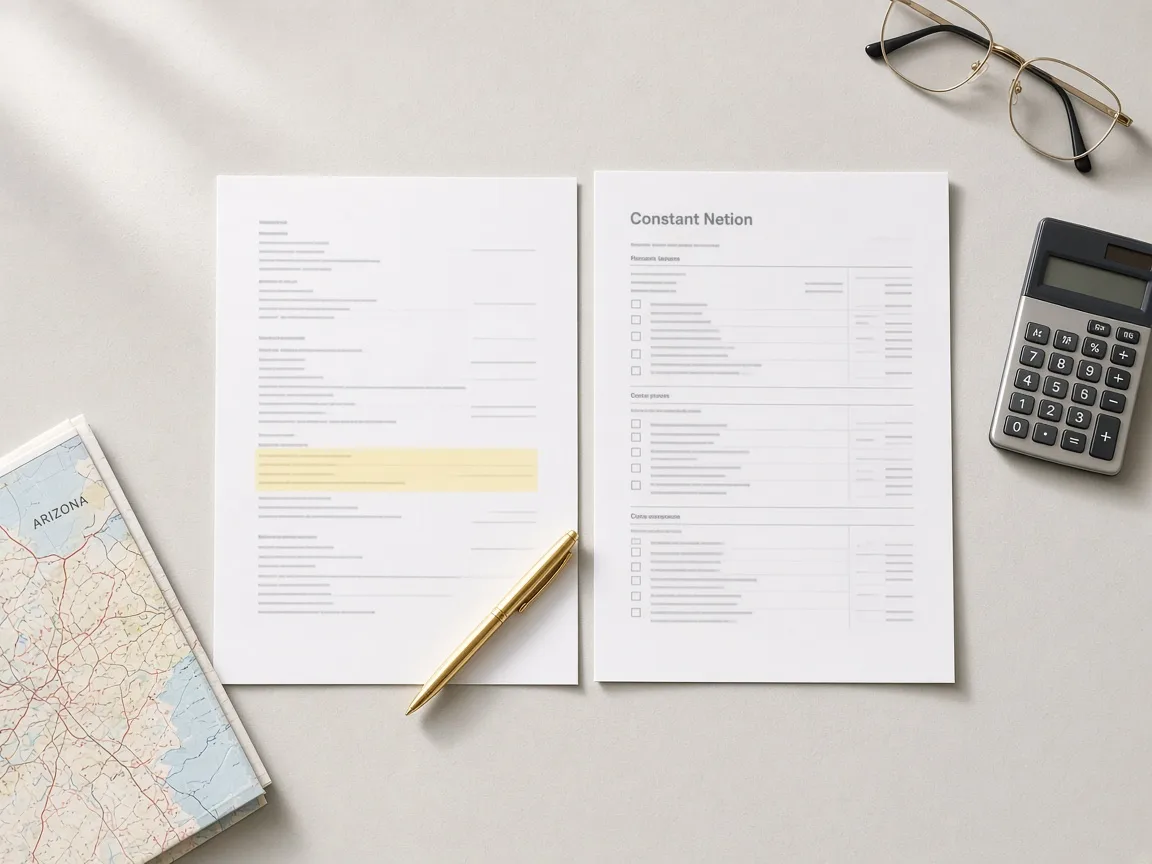
A buyer representation agreement does more than set a price: it makes the broker your agent, and Arizona law ties real duties to that role, including loyalty, disclosure, confidentiality, and accounting, alongside reasonable skill and care. Concretely, that means your agent negotiates on your side, keeps your information confidential, discloses material facts to you, and accounts for the money in the transaction. A listing agent, by contrast, represents the seller, and a buyer with no agreement has no advocate in the deal.
The one situation to understand before signing is limited dual representation. If the same brokerage is asked to represent both you and the seller in one transaction, Arizona law requires the limited agency to be disclosed and consented to in writing, and at that point the agent's role narrows significantly. The agreement and the brokerage's disclosure documents should make this clear, and your question to the agent, "have you already identified any limited-representation situations here?", is a fair one to ask before your first tour.
A clearly labeled hypothetical example
Hypothetical example, for illustration only. The figures are made up to show the logic, not to quote your deal, any agent's terms, or any brokerage's forms.
Say a hypothetical first-time buyer, Jordan, is looking in Goodyear. On a Saturday, Jordan signs a one-day, non-exclusive Buyer-Broker Agreement to Show Property with an agent to test the fit and visit three homes. The day ends, the agreement expires, and Jordan owes nothing and is free to interview other agents.
A month later Jordan signs a 90-day exclusive agreement that states compensation of 2.5% of the purchase price, a term of 90 days, and coverage of homes in the West Valley up to $500,000. Jordan finds a home at $440,000, and 2.5% is $11,000. The seller, who is represented and negotiates the contract directly, agrees to contribute $11,000 toward the buyer's agent compensation through a compensation addendum. At closing, the seller's contribution covers Jordan's obligation in full, so Jordan's cash to close carries no buyer-agent payment.
Change one number and the logic still holds: if the seller had agreed to contribute only $6,000, the agreement leaves a $5,000 balance, and how that balance is paid, from Jordan's funds or an adjusted credit negotiated in the contract, is exactly the kind of term the written agreement is supposed to answer before anyone is surprised at closing.
Choices and tradeoffs: what you can actually control
The agreement is negotiable line by line, which means the tradeoffs are yours to make. The central one is flexibility against commitment: a non-exclusive showing agreement keeps your options open while you test agents, while an exclusive agreement buys a defined level of effort with a defined obligation. Neither is better; the right fit depends on how close you are to buying, how much you trust the agent, and how much time you want to spend interviewing.
Term length is a lever, not a given. If you are months away from buying, ask for 60 or 90 days with a clear renewal conversation; if you are ready to write offers now, a 30-day term may be plenty. Early termination should be in writing, and the buyer-agent compensation article on the seller's side, do I have to offer buyer-broker compensation, shows why sellers treat a contribution as a negotiation, not an obligation.
Finally, keep the total in view. A seller-paid contribution can make representation feel free, but it is a negotiated cost of your purchase either way. The honest question is not whether a line item exists on your closing statement but whether the total cost of purchasing the home, price plus financing plus representation, fits your plan. That is the conversation a good buyer's agent wants to have, and the agreement is where it starts.
Technology, data, and the judgment that stays human
Digital tools have made this part of the process far more legible. E-signature platforms let you review a buyer-broker agreement on your own screen before you sign, and the current rules, forms, and compensation structures are one search away, which is how this article was researched and dated. As an AI Certified Agent, Andrew uses that kind of technology-forward research support to keep Clearly Sold's explanations current and to present cost comparisons on the same math, so you can see the tradeoffs instead of trusting a headline.
The consumer benefit is practical: easier access to the source documents, understandable comparisons of compensation structures, and transparent walkthroughs of the tradeoffs, so the decision stays yours. Tools organize information; they do not replace reading the agreement and asking questions, and no software changes what the law requires to be in writing. Representation is a professional relationship, and technology makes that relationship clearer, not more complicated.
The honest takeaway
Signing a buyer representation agreement before touring is the new normal in Phoenix Metro and the West Valley, and it is a transparency win rather than a trap: who represents you, what you pay, and for how long now sit on one signed page you can keep. Three numbers to find before you sign: how much (the compensation), how long (the term), and how it ends (the termination and any tail provision).
Representation is a choice, and you can make it in small steps, one home at a time if that suits you. Compare the written terms, ask the questions above, and choose the level of representation that fits your goals. Real Estate, Clearly.
Frequently asked questions
Do I have to sign a buyer representation agreement before touring homes in Arizona?
If you are touring with a REALTOR whose brokerage participates in the MLS, yes: under the industry settlement practice changes and Arizona Regional MLS policy, in effect since August 1, 2024, the agent must have a signed written buyer-broker agreement stating a specific, objectively ascertainable compensation amount before showing you homes. The Arizona Department of Real Estate has noted that touring itself is not a state-law requirement, but Arizona law separately requires real estate employment agreements to be in writing, signed, and to have a definite expiration date before a broker is entitled to compensation under A.R.S. Section 32-2151.02, and the statute of frauds in A.R.S. Section 44-101 blocks unwritten commission claims. You are never required to use an agent: you can see homes at open houses, and you can work directly with a listing agent, who represents the seller.
What happens if I do not want to sign an agreement?
You control the scope. A showing agreement can be as narrow as one home or one day, non-exclusive, and it ends when the task ends. If you are not ready to commit, you can tour without your own representation, at open houses or directly through the listing agent, and you can interview agents before signing anything. What you cannot do, under current ARMLS policy, is tour with an agent acting as your buyer's representative without the written agreement that defines that relationship and its compensation.
If I sign an exclusive agreement, do I owe commission even if I never buy?
No. Compensation is earned when you purchase a covered home during the term, not for merely looking. The details to watch are timing and scope: exclusive agreements commonly run 30 to 90 days, cover a defined area and price range, and may include a clause that homes you were shown during the term still owe compensation if you buy them shortly after the agreement ends. Read the term, the termination clause, and that tail provision before you sign, and negotiate the length to match your search pace.
Can the seller pay my agent's compensation?
Yes, voluntarily. Since the 2024 rule change, buyer-broker compensation is negotiated directly with the buyer and written into the buyer-broker agreement, and offers of compensation are no longer advertised on the MLS. A seller can still agree to pay toward your agent's compensation as part of the purchase contract, typically through a compensation addendum negotiated off the MLS. What matters for you is that the buyer-broker agreement spells out how any seller-paid amount applies: whether it covers your obligation in full, reduces it, or leaves a balance you owe at closing.
Are real estate commissions set by law?
No. Commissions are negotiable and not set by law, and the written agreement must reflect what the two of you actually agreed to. The arrangement can be a flat fee, a percentage, a specific dollar amount, or another formula, and different brokers may structure it differently. Comparing several written agreements side by side is exactly how you keep the total honest, the same way you compare Loan Estimates from lenders.
Is signing a buyer representation agreement the same as using the listing agent?
No. A listing agent represents the seller by contract and owes duties to the seller. A buyer representation agreement makes a broker your agent, with duties that under Arizona law include loyalty, disclosure, confidentiality, and accounting, among others. In a transaction where one brokerage represents both parties, Arizona law requires the limited dual representation to be disclosed and consented to in writing, and in that situation the agent cannot act as your exclusive advocate.
Related resources
- The home buying process The full path from pre-approval and offer to escrow, inspection, and closing, with the money milestones marked.
- The commission settlement and the rules in force today What the 2026 settlement does and does not mean, and the buyer-broker agreement policy Arizona buyers already sign under.
- Buyer-broker compensation from the seller's side Why buyer-agent pay is separate from the listing fee, negotiable, and written down before anyone commits.
- Touring a home without your own agent How showings and transactions work when the buyer is unrepresented, and when limited dual representation can apply.
- Preparing to buy: practical readiness checks The budget, documents, and financing stages to line up before you start touring.
- Transparency in real estate Why clear, comparable information is the foundation of a fair transaction.
- Book a strategy call Walk through the agreement and the compensation terms with an agent who explains the numbers.
Sources reviewed November 11, 2026: the Arizona Regional MLS NAR settlement policy page (armls.com/settlement) for the August 1, 2024 effective date and the removal of buyer-broker compensation offers from MLS listings; the NAR commission settlement practice changes effective August 17, 2024; the Arizona REALTORS standard forms library (aaronline.com) for the Buyer-Broker Agreement to Show Property and the Buyer-Broker Exclusive Employment Agreement; Arizona Revised Statutes Section 32-2151.02 (azleg.gov) on written real estate employment agreements and A.R.S. Section 44-101(7) on the statute of frauds; and the Arizona Department of Real Estate's guidance distinguishing touring agreements from state licensing requirements. The rules described here apply to REALTOR and MLS-participating agents who are working with a buyer; brokerages and agents may document representation differently, and forms change over time. This article is education, not legal advice. Verify every term in writing with the broker you are considering and, for questions about your specific contract or legal situation, with an attorney. Clearly Sold is brokered by HomeSmart.
Next step
Want buyer representation explained in writing?
Bring your situation and we will walk through the buyer-broker agreement, what each compensation term means, and how the options change your total costs, so you choose with the full picture on the table.
- Phone
- 623-400-5957
- hello@clearlysold.com