

Blog · Buying a Home
The final walk-through and closing day: what Arizona buyers do before the keys are yours
The inspection found what it found, the repairs were negotiated, and now the home is nearly yours. This guide covers the two last steps: the final walk-through, where you confirm the home is delivered the way the contract promises, and closing day in Arizona, where the loan funds, the deed records, and the keys are finally handed over.
 By Andrew Texidor Realtor · Founder, Clearly Sold Updated November 25, 2026
The direct answer
The final walk-through is a lighter, separate check, scheduled roughly one to two days before closing, where you confirm agreed repairs were done, the home is still in the condition you agreed to buy, and nothing that should come with it is missing. Closing day in Arizona comes down to one event: the close of escrow, which the standard purchase contract defines as the moment the deed is recorded at the county recorder's office, once the loan funds and the paperwork is signed. Only after recording are the keys handed over, typically the same day unless a negotiated rent-back gives the seller extra time.
How to prepare for the walk-through and close, step by step
- 1 Confirm the walk-through date and time with your agent, and schedule it after the seller has moved out and any agreed repairs are complete, usually about one to two days before closing.
- 2 Assemble your reference material: the purchase agreement, the inspection report and any negotiated repair list, and your phone for photos and notes.
- 3 Confirm your Closing Disclosure review window: under federal rules it arrives at least three business days before closing, so verify the cash you need to bring and line up your closing funds early.
- 4 Bring an accepted government-issued photo ID to your signing appointment, and confirm ahead of time who signs, since buyers and sellers typically sign separately with a notary at the escrow or title office.
- 5 On the walk-through, confirm you can enter, the utilities are on, and the property is otherwise ready, then work through the checklist below.
- 6 Document any problem with a photo and message your agent the same day, so minor issues can be resolved before closing rather than after you hold the keys.
What the final walk-through actually is
The walk-through is not a second home inspection. It is a condition check against your contract, done after the seller has moved out, usually within about 24 to 48 hours of closing, per standard buyer guidance. Its job is narrow: verify that the agreed repairs were completed, that the home has not been damaged since the inspection, and that everything the contract says is included is still there. Zillow and realtor.com both stress that this is the buyer's last real chance to see the property before taking ownership, which is why you and your agent should treat it seriously even though it is lighter than the inspection.
Bring the purchase agreement and the inspection report with you. The report tells you which repairs were flagged, and a repair list from your negotiations tells you which of them the seller agreed to fix. Your phone is your second tool: photograph anything that looks wrong, and if you spot a real issue, message your agent the same day so it can be handled before closing rather than after you hold the keys.
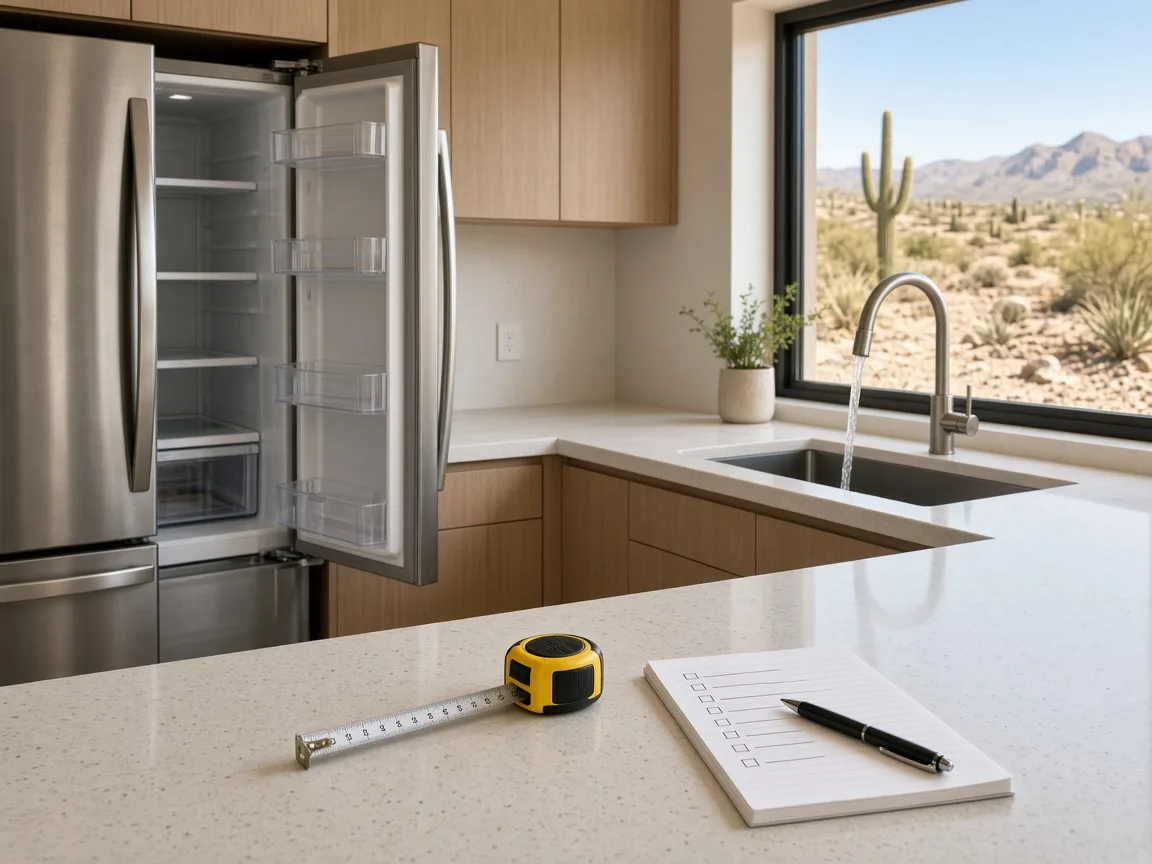
A walk-through checklist for Arizona buyers
- Agreed repairs completed: confirm each item from the negotiated repair list was done, and done properly, not just started.
- Included items still present: appliances, fixtures, window treatments, and anything else the contract says stays with the home, with none swapped for lower-end versions.
- No new damage: watch for scuffs, dents, broken fixtures, or stains left behind during the seller's move-out.
- Systems operational: run the lights, outlets, faucets, the water heater where accessible, and the heating and cooling, and check locks and the garage door opener.
- Clean and move-in ready: the home is swept, the garage is empty, and no personal belongings or trash remain.
- Exterior and utilities: landscaping and any pool stay in the expected state, and the utilities are still on for the walk-through.
If you find a minor problem, ask your agent to raise it with the seller's side right away; a credit or a quick fix can often be settled before closing. If you find major new damage or an agreed repair was never done, the walk-through is the place to catch it, because you still have leverage while the deed is not yet recorded. Your specific rights come from your contract, so your agent, and where the situation calls for it, legal advice, should guide how far you push. The inspection-and-credits article explains how repair requests normally work if you need the background.
What happens on closing day in Arizona
Arizona closing runs on a defined sequence, and most of it happens before the moment you get the keys. The Arizona REALTORS Residential Resale Purchase Contract defines the close of escrow as the moment the deed is recorded at the county recorder's office, so recording, not the signing appointment, is the true finish line. In Phoenix and the West Valley, escrow and title are often provided by the same company, and buyers and sellers typically sign separately, with a notary present, a day or two before the record date.
Signing
buyers review and sign the Closing Disclosure, loan documents, and settlement statement at the escrow or title office with a notary present, usually a day or two before the record date, with photo ID.
Funding
your closing funds are wired or delivered to escrow ahead of time, and the escrow officer works with the lender to fund the loan, because the deed cannot be released until funds are in.
Recording
once funds are in place, the escrow officer sends the deed to the county recorder's office; when it is officially recorded, the close of escrow occurs and title transfers to you.
Keys
after recording is confirmed, the seller or the seller's agent hands the keys to you or your agent, typically the same day, unless an agreed rent-back gives the seller extra days in the home.
Two practical notes apply across Phoenix Metro. First, wire everything through instructions you confirm in writing and by phone with your escrow officer, because wire fraud is the single biggest closing-day risk, and the article on AI escrow scams covers how to protect yourself. Second, if you are buying a newly built home, the builder's own walk-through has extra steps, orientation, and warranty paperwork, covered in the new-construction guide.
Choices and tradeoffs between the walk-through and closing
The quiet trap of the walk-through is timing. Do it too early and the seller may not be out yet, and items could still be missing or damaged in the final move. Do it too late and there is no room to respond if you find something. That is why roughly a day or two before closing is the standard, and why you schedule it around the seller's confirmed move-out date rather than the other way around.
The larger tradeoff is where you push: before recording, you still have leverage to negotiate a credit or a fix; after recording, that leverage is essentially gone. So treat minor findings as something to resolve in the closing window, and treat a major problem as a genuine fork, because the decision to delay closing or ask for a credit has real costs on both sides. And remember that possession rights are separate from the close itself: if the seller needs to stay for a rent-back, the per-diem, the move-out date, and the overstay penalty should all be in writing, not handled with a handshake on closing day.
A clearly labeled hypothetical example
Hypothetical example, for illustration only. The details are made up to show how the process works, not to describe any real transaction, property, or party.
Say a hypothetical buyer is under contract on a $410,000 resale home in Glendale, with closing set for a Friday. Their walk-through is scheduled for Wednesday evening, after the sellers confirm they have moved out and the agreed HVAC repair was supposed to be complete. On the walk-through, the buyer finds two things: an attic access door that was damaged during the move-out, and no visible sign the HVAC repair was finished. They photograph both, check the rest of the house, and message their agent that same night.
Because the buyer acted during the walk-through window, before the deed recorded, their agent raises it with the seller's side and the parties settle on a small closing credit instead of delaying the deal. The loan funds Thursday, the escrow officer sends the deed to the Maricopa County Recorder on Friday, and once recording is confirmed the buyer's agent picks up the keys that afternoon. Had they stayed quiet or waited until after recording, the same findings would have been theirs to manage on move-in day with no leverage left to negotiate.
What you sign and what you bring on closing day
In a typical Arizona purchase you sign the Closing Disclosure, the loan documents, and the settlement statement at the escrow or title office, with a notary present. Bring a government-issued photo ID; for an individual buyer that is enough, while trust or entity buyers arrange authority documents ahead of time. Your closing costs were already itemized on the Loan Estimate and then the Closing Disclosure, so the buyer-closing-costs article is the best companion read here, along with the title-insurance article for what your owner's policy protects.
One timeline fact keeps first-time buyers organized: the Closing Disclosure must arrive at least three business days before closing, using a specific definition of a business day, and that is your window to compare it line by line against the Loan Estimate and ask about anything that moved. After closing, the recorded deed is mailed by the county recorder, and setting up your utilities in your name starting on your possession date is where the West Valley utility guide helps you plan ahead.
How technology helps without replacing judgment
Closing day is a day of many small, deadline-driven steps, and that is where order matters more than any single number. Andrew, an AI Certified Agent™, uses AI-assisted organization to keep your Closing Disclosure, repair list, walk-through checklist, and fund-wiring steps in one place, to flag deadlines like the three-day Closing Disclosure window, and to compare the documents side by side so nothing shifts unnoticed. Clearly Sold's payment calculator and home buying process guide put the numbers and the sequence in front of you early, when decisions are still cheap to change.
What the tools do not do is decide whether a finding on the walk-through is worth pushing on, whether a credit is fair, or whether to delay a closing date. That judgment stays with you, Andrew, and the professionals around the table: your escrow officer for the ledger and the recording, your lender for funding, and your agent for the negotiation. Technology organizes the day; judgment runs it.
Frequently asked questions
When do I actually get the keys in Arizona?
After the deed is recorded at the county recorder's office. Under the Arizona Residential Resale Purchase Contract, the close of escrow is defined as the moment the deed is recorded, and only after recording is confirmed are the keys handed over, usually the same day. Financing and recording times vary, and same-day morning recordings can slip into the afternoon, so the honest answer is: keys come once the recording is official, not at the moment you sit down to sign. If the seller needs extra days, that is handled by a negotiated rent-back, not by a loose promise on closing day.
Is the final walk-through a second inspection?
No. The walk-through is a lighter, focused condition check that confirms the home is delivered in the condition the contract requires, that agreed repairs were completed, and that items included in the sale are still present. It is typically scheduled within about 24 to 48 hours of closing, after the seller has moved out. A full home inspection happens earlier, during your inspection period, and the two serve different purposes, so bring the inspection report to the walk-through to verify the repairs from it.
What if I find a problem on the walk-through?
Document it with a photo and tell your agent the same day. For minor issues, the seller can often address a credit or a quick fix before closing. For major new damage or an agreed repair that was never done, your options depend on your contract and the timing, so your agent and, where the situation warrants it, legal advice should guide you, but the walk-through is your last chance to catch a problem while you still have leverage, because that leverage drops sharply once the deed records.
What do I need to bring to the signing?
A government-issued photo ID, which the notary will verify, plus the funds your Closing Disclosure says you owe at closing. In most Arizona transactions the buyer signs the loan documents, the Closing Disclosure, and the settlement statement at the escrow or title office, and the escrow officer has the full document package ready for you. Wiring or delivering your closing funds ahead of the appointment is the part people miss: escrow cannot release the deed until your funds and the lender's funding are both in place, so confirm your wiring instructions by phone with your escrow officer before you send anything.
How does a rent-back change closing?
A rent-back, also called a post-possession agreement or lease-back, lets the seller close on time and then stay in the home as a renter for an agreed period, with the rent, move-out date, and overstay penalty written into a post-possession addendum. The close of escrow still happens on schedule and the keys belong to you, but physical possession is delayed for the agreed term. The mechanics are covered in the article on coordinating the sale and purchase.
Can a seller walk your offer if the appraisal comes in low?
This is separate from the walk-through, but it is the most common question near closing. A low appraisal does not automatically cancel the deal: the buyer can bring more cash, the parties can renegotiate, or the buyer can invoke appraisal-gap coverage they built into the offer. The appraisal gap article walks through how that works under the Arizona contract and the Appraisal Contingency Notice, and it is worth reading before your walk-through date in case value comes in short.
Related resources
- The home buying process The full path from pre-approval and offer to escrow, inspection, walk-through, and closing, with the money milestones marked.
- Buyer closing costs The itemized lender, title, escrow, and prepaid costs, and how the Loan Estimate and Closing Disclosure keep the total honest.
- Title insurance What owner's and lender's policies cover, who pays under the Arizona contract, and the exclusions to read.
- After the home inspection How repair requests and credits work after the inspection, and how the walk-through follows up on them.
- Reading an inspection report What a home inspection covers and how to read the report without overreacting.
- Sell first or buy first How the sale and purchase coordinate, including rent-backs that change when the keys are yours.
Educational note: this article explains how the final walk-through and closing generally work for an Arizona residential purchase. It is education, not a promise of a closing date, a credit, or an offer, and not legal, tax, or financial advice. Walk-through timing, the condition of a specific home, whether a finding justifies a credit or a delay, and your contractual rights all depend on your purchase contract and your transaction, so verify every detail in writing with your agent, escrow or title officer, and legally qualified advice where warranted. The hypothetical example uses placeholder figures and events for illustration only and is not real data, a quote, or a program term. Sources reviewed November 25, 2026: Arizona REALTORS Residential Resale Purchase Contract definitions of close of escrow; Old Republic Title buyer checklist on funding, recording, and keys; Arizona Residential Resource on closing day and recording; and Zillow and realtor.com guidance on what to check in the final walk-through. Clearly Sold brokered by HomeSmart. Real Estate, Clearly.
Next step
Walk into closing knowing exactly what to expect
Bring your purchase agreement, your inspection notes, and any questions about the walk-through or closing day. We will walk the checklist with you, connect you with escrow and title professionals who give clear answers, and make sure the home is delivered the way the contract promised.
- Phone
- 623-400-5957
- hello@clearlysold.com